

There are underdog stories, and then there is Sylvester Stallone refusing US$350,000 because Hollywood would not let him play the boxer he created.
Now there’s confidence to be admired.
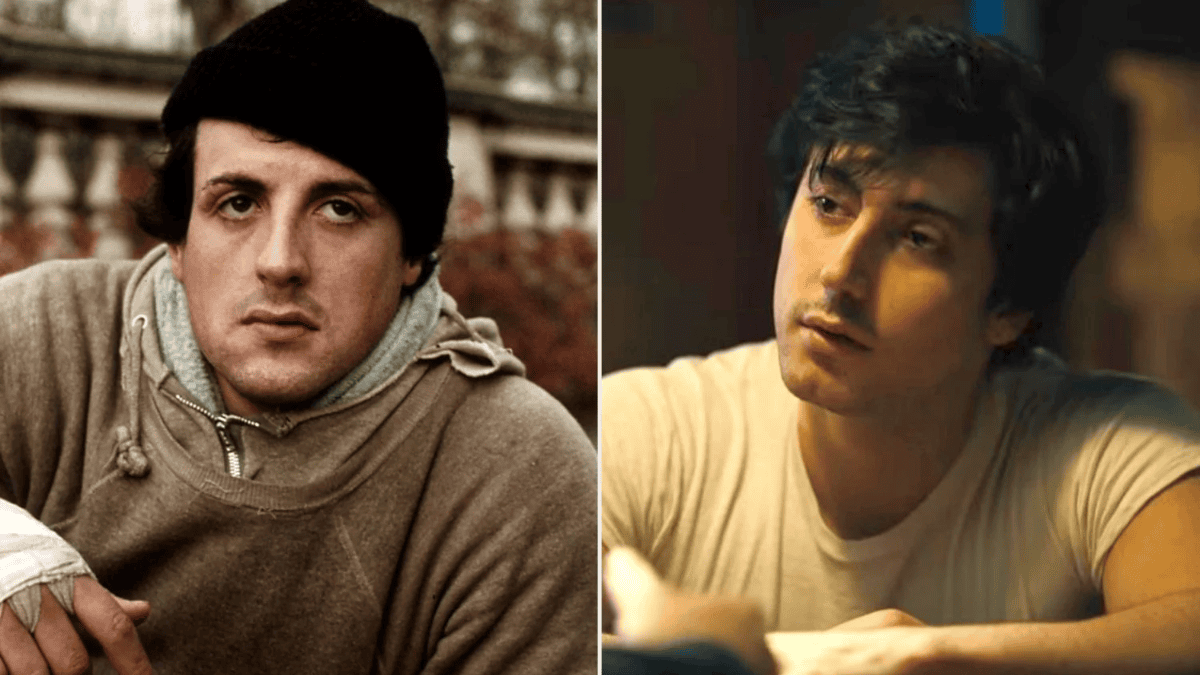
I Play Rocky tells the story behind the making of the original Rocky. Anthony Ippolito plays Stallone before the fame, sequels and enormous bronze statue. At this point, he is a struggling actor living in a miserable New York hotel and auditioning for roles such as “Thug #2”. Not exactly the career he imagined but everybody needs something when they have nothing, right?
The movie is directed by Peter Farrelly and follows Stallone as he writes Rocky, sells the script and refuses to surrender the leading role. The thing is that studio executives want the story, but not the unknown actor who speaks as though he has rocks in his mouth. Now, for Stallone, there is only one answer.
He plays Rocky and no amount of money will change his mind.
Ippolito’s performance prevents the film from feeling like a cheap impersonation. He captures Stallone’s voice, appearance and mannerisms with astonishing accuracy. And he also finds the man beneath them. His Stallone is warm, stubborn and completely convinced that he belongs in a role nobody else believes he deserves. That becomes the film’s greatest strength.
The story of Stallone making Rocky mirrors the story of Rocky Balboa himself. Both men receive very little encouragement. Both appear completely outmatched. And both decide that remaining on their feet matters more than winning in the traditional sense. The film spends time on Stallone’s relationship with Sasha, played by AnnaSophia Robb. She encourages him to write the kind of role Hollywood refuses to offer him. After watching Muhammad Ali fight underdog Chuck Wepner, Stallone finds the idea that eventually becomes Rocky.
The script attracts producers Irwin Winkler and Robert Chartoff, played by P.J. Byrne and Tony Kebbell. They recognise its potential but are not so keen on him playing the lead. So naturally they begin increasing their offers. And yes, Stallone desperately needs the money. But he wrote this role for himself, and he is determined to play Rocky. Seeing that he was parking cars for a living, you would think that he would have accepted the cheque before anyone changed their mind. But Stallone understood that selling the script without himself would mean giving away the part of the story that belonged to him.
And his stubbornness pays off. Eventually, the producers agree. Unfortunately, they can only proceed by reducing the budget to approximately US$1 million. And that limitation helps create the film audiences know. Director John Avildsen, played by Jay Duplass, must work quickly on a low budget. The production heads to Philadelphia, experiments with the newly developed Steadicam and asks actors who cannot box to make the fights believable. Stallone injures himself punching frozen meat but cannot stop filming because the schedule has no room for recovery.
Hollywood glamour appears to have been absent that week.
Farrelly turns these problems into a lively comedy about creativity under pressure. Money is short, time is disappearing and several people remain convinced that Stallone will ruin the film. But every limitation forces the team to make choices that later become iconic. Although I do see one weakness.
Watch trailer here:
I Play Rocky understands how Stallone’s struggle reflected Rocky Balboa’s journey, but it does not fully explore how the original film changed American cinema. Rocky arrived during a period filled with darker stories and offered audiences something they desperately wanted: hope.
Still, I Play Rocky appears to understand why people continue loving the character 50 years later. It is not simply the running, punching or dramatic music. Rocky made people believe that an ordinary person could receive one chance and refuse to waste it. Stallone did exactly the same thing.
He did not merely write an underdog story.
He lived one first.
