

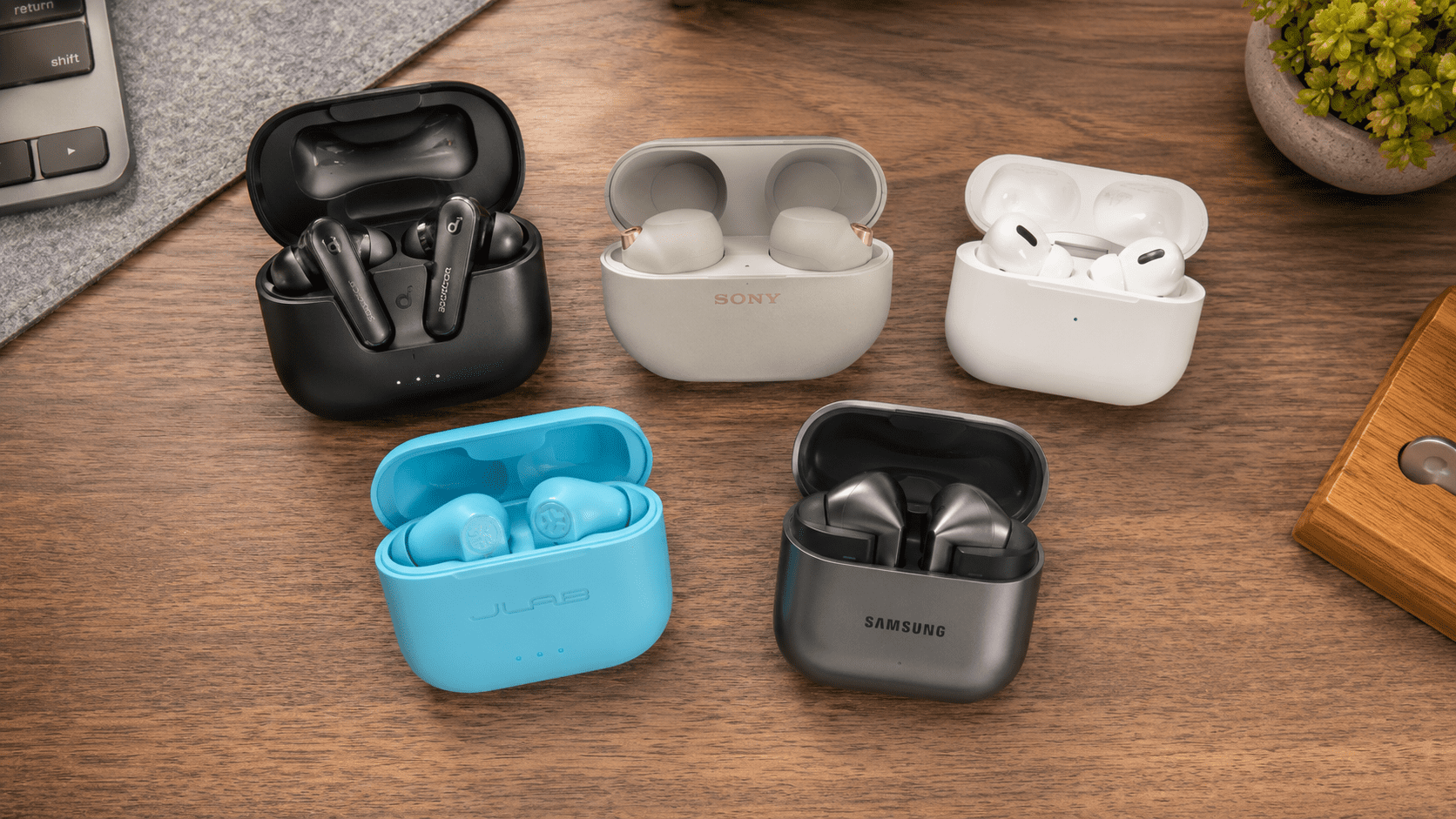
A South African buyer’s guide
Buying wireless earbuds in South Africa should be simple. Instead, you scroll through a local store and hit a wall of hundreds of pairs, prices running from under R200 to north of R5,000, and a soup of acronyms like ANC, IPX4, and Bluetooth 5.4 that nobody bothers to explain. So most people do the only thing they can: grab whatever looks decent and hope it sounds alright.
That is how you end up disappointed. But it does not have to be a gamble. Once you know what actually separates a R300 pair from a R3,000 pair, the choice gets a lot easier. Here is how to spend your money well.
First, be honest about how you will use them
Forget the specs for a minute and think about your day. The earbuds that are brilliant in the gym are often useless on a long call, and the pair that sounds gorgeous on your commute might fall straight out the moment you break into a run.
Most of us land in one of four camps. Commuters and office workers mostly take calls and want to shut out the noise around them. Gym-goers and runners need a secure fit that survives sweat. Music-first listeners care about sound above all else. And plenty of people just want something that pairs without fuss and lasts the day. Work out which one you are, and you will know which features are worth paying for and which you can happily ignore.
What the price tiers actually get you
Here is the good news: the gap between cheap and premium has closed a lot. A solid R900 pair today can outdo a flagship from a few years ago. The tiers still matter, though, so this is what your money buys at each level.
Entry level, roughly R200 to R600
No-frills territory, and nothing wrong with that. Local names like Volkano and Supa Fly live here, alongside the cheaper end of JLab and Anker’s Soundcore range. You get stable Bluetooth, a day’s battery with the case, and sound that is perfectly fine for podcasts and casual listening. Real noise cancellation is rare, and calls can struggle in wind. The standouts punch well above their price. The JLab Go Air Pop, around R400 to R500, is a long-running budget favourite with dependable Bluetooth, good battery life, and a two-year warranty. The Anker Soundcore R50i, around R500, or R700 for the noise-cancelling version, somehow crams in 10mm drivers, Bluetooth 5.3, IPX5 water resistance, 30 hours of playtime, and 22 EQ presets at that money.
The sweet spot, roughly R700 to R1,500
This is where most people should be shopping. Brands like Volkano X, Soundcore, and JLab pack in features that used to be premium-only: decent noise cancellation, multipoint pairing, longer battery, and water resistance that shrugs off a sweaty session. For training, the JLab Go Air Sport, around R700 to R900, is purpose-built, with an IP55 rating, a secure earhook fit, and a two-year warranty. It is also properly ICASA and NRCS certified for sale here, which is exactly the kind of above-board stock you want, and more on why that matters shortly. Stretch the budget a little and the Sony WF-C710N, around R2,200 to R2,400, gives you genuine noise cancellation, an ambient mode, multipoint, and 30 hours of total battery.
Premium, roughly R2,500 and up
Flagship territory, and it splits cleanly in two. First, the ecosystem players: the Samsung Galaxy Buds 3 Pro, around R3,400, and Apple’s AirPods Pro. These sell on how effortlessly they slot into the phone you already own, not on raw sound. Flip open an AirPods case next to an iPhone and you pair in a single tap, and from there the same pair follows you across your iPhone, iPad, and Mac, with extras like spatial audio and hands-free Siri along for the ride. Samsung pulls the same trick for Galaxy owners. The catch is that the magic mostly stays inside its own world. Put AirPods on an Android phone, or Galaxy Buds on an iPhone, and you lose much of what you paid for. The second camp is the audio specialists, who work just as well on any phone. JBL makes strong all-rounders that often undercut the big-name flagships, Bose remains the benchmark for noise cancellation, and Bowers and Wilkins sit at the very top for pure sound.
The specs worth caring about
Most spec sheets are marketing. A budget pair that claims noise cancellation, premium codecs, and a high waterproof rating all at once is almost certainly overselling at least one of them. So focus on the handful of things that actually shape your day.
Active noise cancellation is the feature most worth paying up for if you commute or work somewhere loud, and also the one most often faked below R700, so treat cheap ANC claims with suspicion. Fit and water resistance matter most if you are active: look for an IP rating, where IPX4 handles sweat and light rain, and bear in mind that a secure fit is something you can only judge by wearing them, which makes a generous return policy worth more than any number on the box.
Microphone quality is the spec everyone forgets until it embarrasses them. This one is crucial if you live on online meetings. A cheaper pair often sounds great to you, because the audio reaching your ears is fine, while the person on the other end hears you muffled and buried in background noise. The mic, not the speaker, is what everyone else on the call judges you by, and it is rarely the feature shouted loudest on the box.
Two more quick ones. Battery life is usually quoted both for the buds alone and for the buds plus case; the case figure looks impressive in an advert, but the per-charge number on the buds is what you live with day to day, and six hours or more is comfortable. Multipoint pairing keeps the buds connected to two devices at once and switches automatically when a call lands, and it is the feature you miss most once you have had it. Codecs and driver sizes, on the other hand, are mostly noise for the average listener.
The local catch nobody mentions: ICASA
Here is one that is specific to buying in South Africa. Anything with Bluetooth, which means every pair of wireless earbuds, has to be type-approved by ICASA before it can legally be sold here. It matters most when you are tempted by the cheapest grey imports or an unfamiliar marketplace listing. A proper retailer stocks approved gear as a matter of course. A bargain shipped from who-knows-where might not be approved, might carry no real warranty, and might leave you with no recourse at all when it dies three months in. The handful of rands you save is rarely worth it.
The quick picks, at a glance
If you would rather skip to a recommendation, here is the shortlist by what you need. Tap a pick to see it on Makro.
| Best for | Pick | Where to buy |
| Best value for money | JLab Go Air Pop | JLab Go Air Pop on Makro |
| Most features for the money | Anker Soundcore R50i | Soundcore R50i NC on Makro |
| The gym and running | JLab Go Air Sport | JLab Go Air Sport on Makro |
| Everyday value with real ANC | Sony WF-C710N | Sony WF-C710N on Makro |
| Premium without an ecosystem | JBL Tune 235NC | JBL Tune 235NC on Makro |
| The Apple world | Apple AirPods Pro 2 | AirPods Pro 2 on Makro |
| The Samsung world | Samsung Galaxy Buds 3 Pro | Galaxy Buds 3 Pro on Makro |
Prices move, so treat these as a guide and check the listing before you buy.
The bottom line
You do not need to be a tech expert to buy well, you just need to know what to look for. Match the earbuds to how you live, not how they are marketed. Favour a longer warranty over the usual six months, because a brand that backs its product is telling you that they believe in the quality and longevity of their product. And trust the ICASA approval, your sign it has met South Africa’s safety standards. Do that, and the next pair you buy will be one you are still reaching for months from now, not one you are quietly replacing
