

Somewhere in this house there is a drawer, and somewhere in that drawer there is a small plastic egg with a dead pixel animal inside it, a creature starved to death sometime around 1998 because double maths ran long and the beeping was audible from the back row. That was the deal we made with Bandai when the Tamagotchi arrived, and it was a surprisingly cruel one for a toy that cost the equivalent of a school tuck shop budget. You fed it, you cleaned up after it, you played with it, and if you got distracted by actual life for six hours it died with a little angel floating above its corpse, and you carried that around for a week.
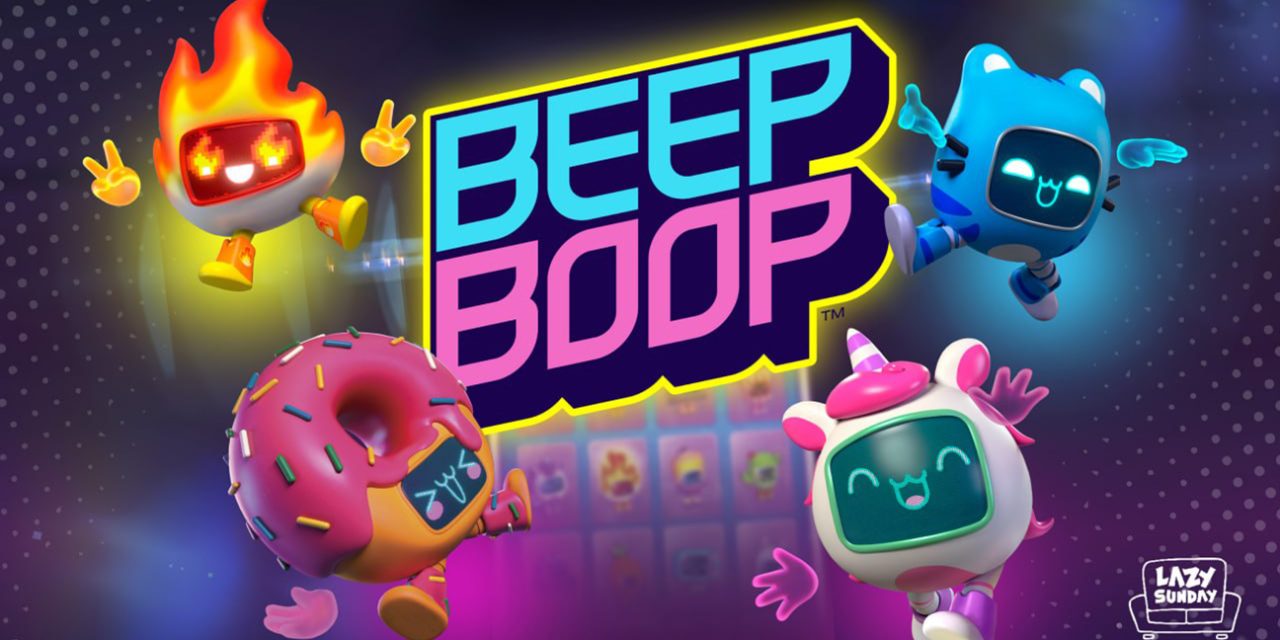
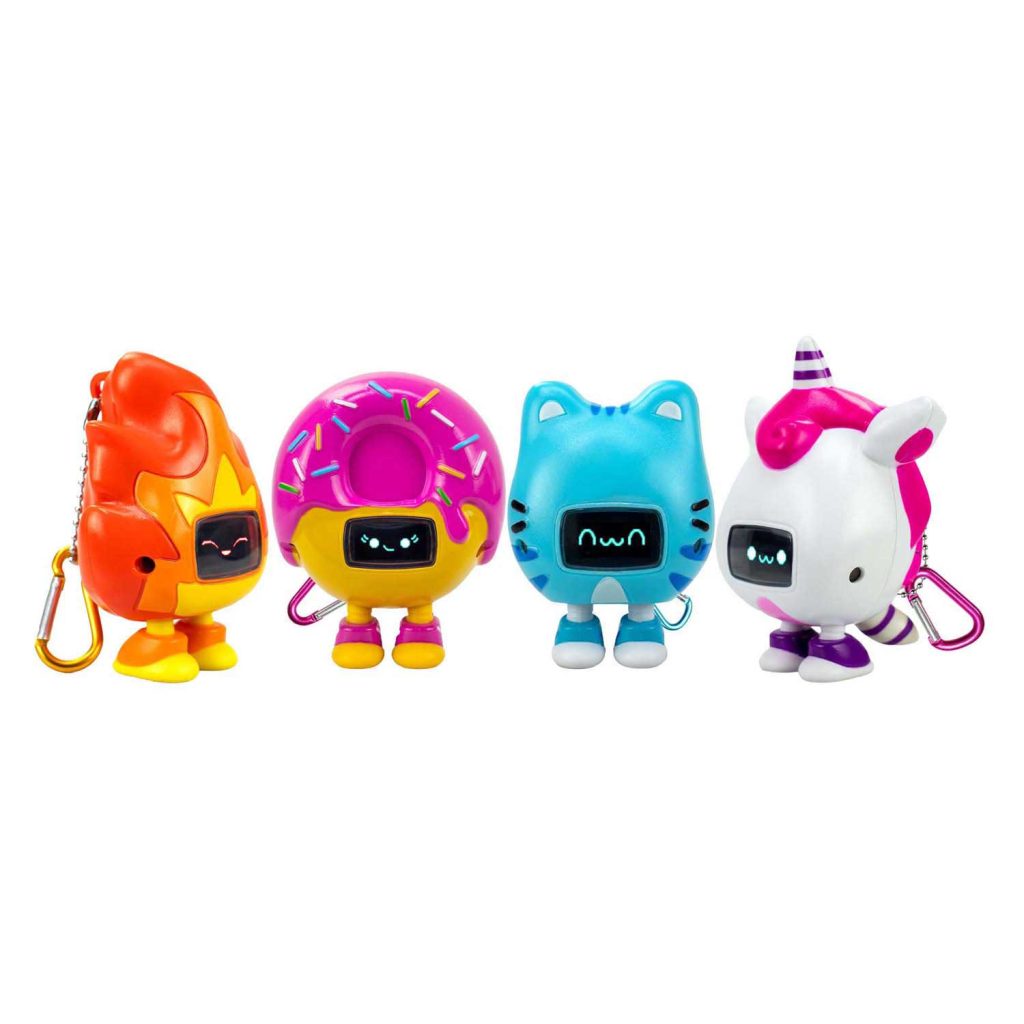
Nearly thirty years later, Solarpop has just announced it is bringing Beep Boop to South Africa, and if the concept feels familiar that is entirely the point. Four characters called Kirin, Mochi, Tochi and Miao Miao, each roughly the size of your palm, each designed to clip onto a school bag, each demanding to be fed and played with and put to bed, and each perfectly capable of making you feel like a negligent parent before you have finished Grade 3. The care loop has not changed. The screen is just in colour now, and the thing has opinions.
The bit that makes this a 2026 toy rather than a 1997 one
Here is where it gets interesting, and where I stopped rolling my eyes at the press release. Put two or more Beep Boops within range of each other and they sync up and sing together, in harmony, in what the brand insists on calling a cappella mode. Philip Galliford of Solarpop describes it as playtime turning into a tiny toy choir, and calls it “a small toy with a surprisingly big personality”, which is the kind of line you write when the demo genuinely lands in a room full of nine year olds.
Connectivity between digital pets is not new. Tamagotchi Connection did it with infrared in 2004 so your pet could meet another pet, fall in love and produce a small pixel baby, which was a lot for a Standard 5 playground to process. Digimon did it with a physical link port and a battle animation. What has changed is that the connection is now the marketing rather than the hidden extra, and that it works on proximity rather than on two kids lining up two infrared windows on a desk while the bell goes. Local device to device sync, sold to a seven year old as a singalong, is quietly one of the neater bits of consumer product design I have seen this year.
The rest of the spec is straightforward and honest about what it is. Over a hundred sounds, animations and moods. Four built in mini games, which international listings for the range name as a sushi claw challenge, a flying rescue game, a poo challenge (of course there is a poo challenge, the target market is four to nine) and a block breaker. Controls are on the legs, so you press the toy rather than hunt for a button. There is an animated series on the official YouTube channel and a TikTok account, because in 2026 no toy ships without a content universe attached, and the toy is increasingly the funnel rather than the product.
The maker is the plot twist
Beep Boop comes out of CircuitMess, and if you have been anywhere near the STEM toy aisle in the last few years that name should make you sit up. CircuitMess is a Croatian outfit founded in 2017 by Albert Gajšak, who was eighteen at the time and had just come off a Kickstarter for a DIY handheld console you assembled yourself. His follow up, a build it yourself mobile phone, pulled in more than three hundred thousand dollars from backers. The company later landed a global Warner Bros licence for a build your own Batmobile, which is not a sentence you get to write about many electronics startups from Karlovac.
So the company that made its name telling kids to pick up a soldering iron and understand what is inside the thing has now shipped a toy that works out of the box with no assembly at all. Read that as a sellout if you like, but I read it as the STEM toy market growing up and admitting something obvious, which is that the number of parents willing to supervise a soldering session is small and the number of parents who want a gift that works before the birthday party starts is enormous. You go where the shelf space is, and the shelf space is at Toy Kingdom, not at a science fair.
The number that changes the whole argument
Takealot has them listed at R309, and that price is the most interesting thing in this entire story.
Do the arithmetic with me. Internationally these carry a recommended price of around thirty nine US dollars, which at roughly R16.40 to the dollar is about R640 a unit. We are being asked for less than half of that. If you have spent any time in South African consumer tech you will know how rare this is, because the usual sequence is that a device launches overseas, arrives here nine months later, and lands at the dollar price converted, plus duty, plus VAT, plus a margin, plus a quiet surcharge for the inconvenience of living at the bottom of a continent. Getting a gadget at half the American shelf price is not something I get to type often, so allow me the moment.
Which then reframes the part every South African parent had already braced for, because we have lived through Zuru Mini Brands, through Beyblade, through the entire Pokémon card economy that turned school breaks into a trading floor. The collect them all mechanic here is not a bonus, it is structural, and CircuitMess says so out loud: the more Beep Boops you put together, the bigger the choir gets and the more complex the songs become. A single unit is a nice toy. Two is a duet at R618. The full crew of Kirin, Mochi, Tochi and Miao Miao comes in around R1,236, which for a four piece electronic band is frankly reasonable, and which is a very different conversation from the two and a half thousand I was mentally preparing to warn you about.
Your child will do this maths faster than you will, and they will do it out loud, in the car, repeatedly. The good news is that at R309 you can lose that argument without it becoming a household event. The better news, for the strategically minded, is that the toy syncs with any Beep Boop in range, so one unit plus one friend at school achieves exactly the same harmony at half the household cost. Let the neighbours fund the second voice.
The feature nobody is putting on the box
Nothing in the material mentions an app, an account, a login, a subscription or a cloud service, and after years speaking about connected devices I want to flag how unusual that is becoming. A toy for a four year old that does not want their parent’s email address, does not ping a server, and cannot show them a recommended video at 9pm is, in 2026, a genuine privacy feature. If that holds into the future, it is worth more to me than the hundred sounds.
The nostalgia is the hook, and it works, because those of us who buried a Tamagotchi in a drawer are now the ones with the credit card. But the reason this format keeps coming back is not sentiment. It is that a small demanding creature in your pocket teaches a child something real about consequence and attention in a way that no app has ever managed, and it does it without an infinite scroll attached. My generation learned it the hard way, in double maths, with the sound off.
Their generation gets to learn it with backing vocals.
