

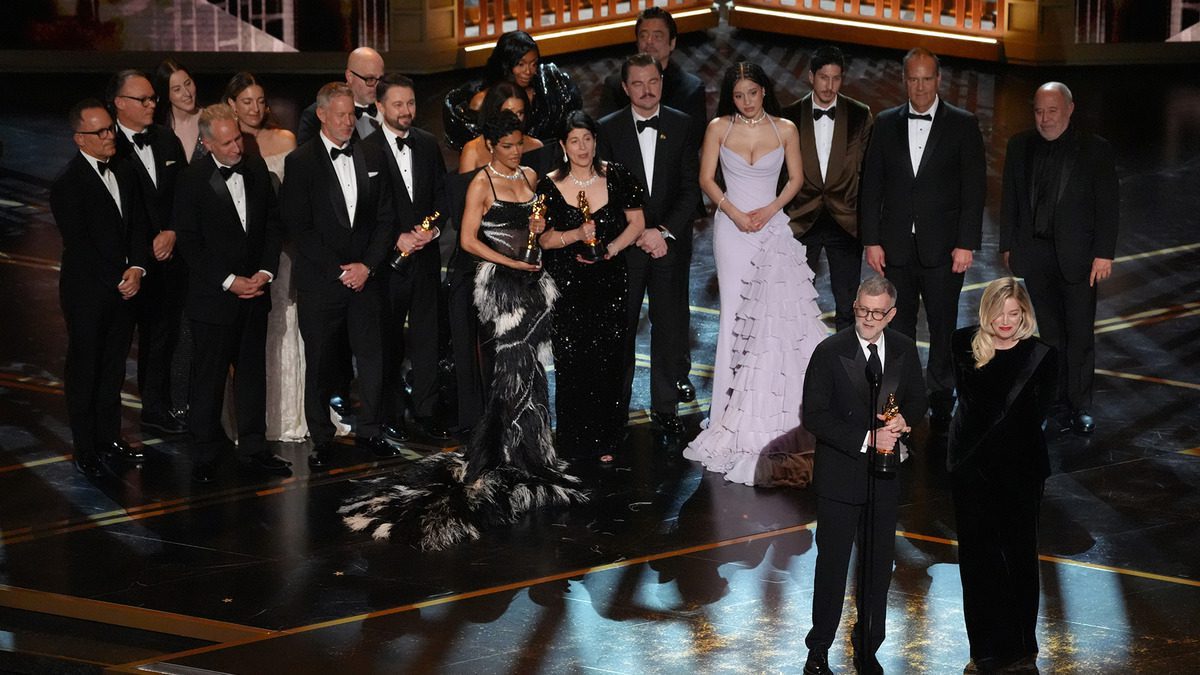
The Oscars love a good story, and I am not referring to the ones on screen. I am referring to the ones that build in the background over years.
This year’s ceremony felt less like a slow exhale. A lot of the people walking up to that stage had been circling the moment for a long time.
And at the centre of it all was Paul Thomas Anderson’s One Battle After Another.
After months of awards season speculation, the film claimed Best Picture, along with Best Director for Anderson and Best Supporting Actor for Sean Penn, among others. It ended the night with six Oscars, making it the clear heavyweight of the evening. If you are somebody that has followed Anderson’s career, the win carries a certain quiet symmetry. Few filmmakers have shaped modern American cinema quite like he has, yet the Academy had never quite handed him the crown. Until now, that is. Sometimes the industry catches up. Eventually.
Michael B. Jordan’s Moment Finally Arrives
One of the biggest emotional beats of the night came when Michael B. Jordan won Best Actor for Sinners. We all knew that with the talent that Jordan posses, he was definitely destined for that stage. Although his performances and cultural impact were magnificent, the Oscar had always remained just slightly out of reach. Sinners finally changed that.
The film itself had entered the night as a powerhouse with 16 nominations, and while it ultimately lost the Best Picture race, it still walked away with several major wins, including Best Original Screenplay for Ryan Coogler. Jordan’s victory felt like the kind that audiences root for and it arrived right on time.
Jessie Buckley’s Quiet Triumph
The Best Actress race delivered one of the evening’s most quietly powerful moments. Jessie Buckley won for Hamnet, a performance that critics had been championing for months but that never quite felt like the loudest contender. That might be part of why the win landed so well. Buckley has built a career on performances that feel raw, intimate, and slightly unpredictable. The Academy rewarded that this year, and in doing so made a bit of history. She became the first Irish actress to win the category.
Supporting Wins and the Shape of the Night
Elsewhere, the supporting categories filled in the rest of the evening’s emotional landscape. Sean Penn picked up Best Supporting Actor for One Battle After Another, giving Anderson’s film another major boost as it continued its march through the ceremony. Meanwhile, Amy Madigan won Best Supporting Actress for Weapons, a performance that had been steadily gathering momentum in the final weeks of awards season.
And in one of the night’s more unexpected cultural moments, the animated film ** KPop Demon Hunters ** took home Best Animated Feature and Best Original Song, marking the first time a K-pop track has ever won an Oscar. It was the kind of win that quietly reminds you the Academy is still learning how to expand its taste. Slowly, and steady.
A Ceremony About Timing
If there was a theme running through the 2026 Oscars, it might simply be patience. Paul Thomas Anderson finally got the industry’s biggest prize.
Michael B. Jordan finally held the statue people assumed he’d win one day. Jessie Buckley’s steady, fearless career reached a new peak. But none of these wins felt like lightning bolts. They felt more like the end of a long road. And maybe that’s the thing about the Oscars that still works, even after nearly a century of glitz, politics, and occasional chaos. Every once in a while, the Academy gets the timing right. Not perfectly, just right enough.
