

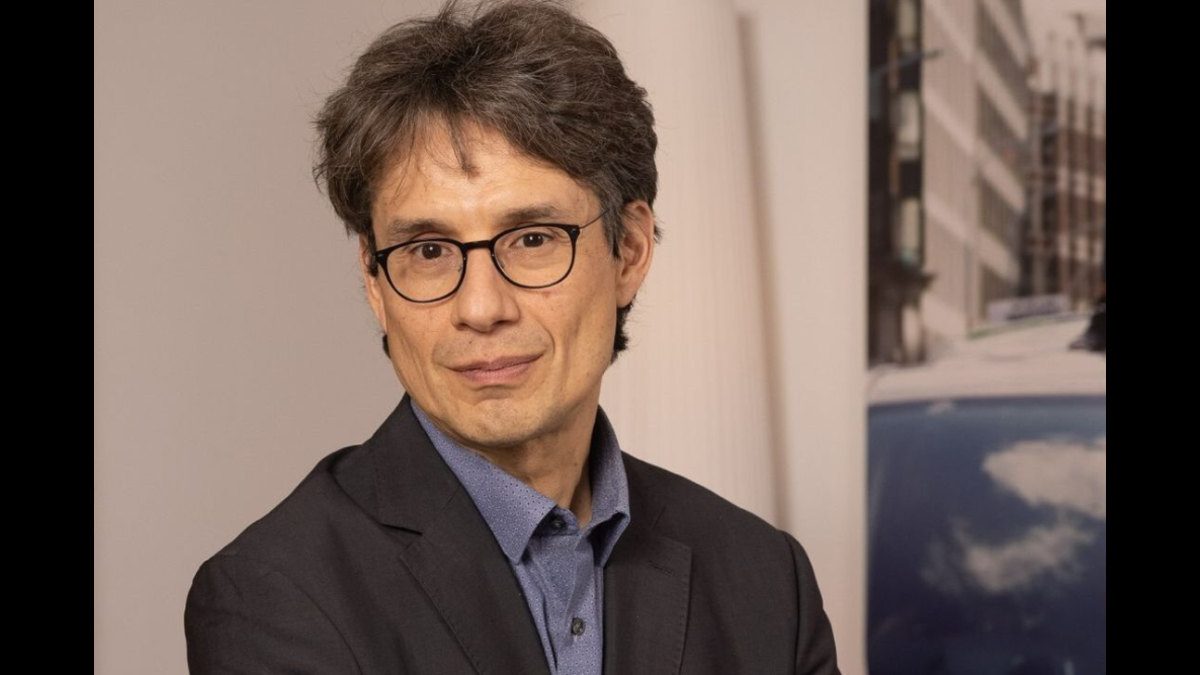
The leading documentary festival CPH:DOX chose “Media Sovereignty: Rethink, Envision, Redefine” as the theme for its second-ever CPH:SUMMIT. This year’s event gathered politicians, innovators, researchers and documentary professionals to discuss the future of the audiovisual industry, focusing specifically on the state of information, technology and shifting notions of truth per Variety. In the opening keynote, president of public broadcaster Arte France Bruno Patino provided a bleak yet piercingly precise evaluation of the industry today.
Now, there’s something quite unsettling about the way people talk about AI. It’s not so much about the technology itself, but more about the tone. It all lends to speed, scale, and domination. Current topics revolve around bigger models, faster outputs, and entire industries being reshaped overnight. Similar to standing in a race nobody exactly signed up for, but somehow still expected to win. And then along came Bruno Patino, who gently pulled the conversation in a different direction. There was nothing loud about it, it was just … smarter.
Bruno Patino’s “Relationship Economy” Explained
According to Patino, AI isn’t just another technological shift. It’s something more structural, more psychological. He described this moment as the beginning of what he calls a “relationship economy.” Not an attention or a content economy. A relationship one. Which, if you sit with it for a second, feels less like a prediction and more like a reality check. Why?, because AI can generate content endlessly. Words, images, videos, and entire personalities if you let it. It’s efficient, it’s scalable, and it’s starting to blur the line between what’s created and what’s simply… produced. But relationships? Those don’t scale the same way.
Content Is Infinite. Authenticity Is Not
If there is something that cannot be done, it is that trust cannot be automated. Meaning cannot be mass-produced, and connection can definitely not be faked. That’s where Patino’s warning lands. Not as some dramatic “AI will take over” headline, but as something arguably more uncomfortable. If everything becomes generated, then what actually matters is who you trust, who you choose to listen to, and who you believe is real. And suddenly, there you have it, a total game change. So, in a world flooded with infinite content, attention isn’t the scarce resource anymore, authenticity is. And Patino’s answer to that shift isn’t competition, it’s coalition.
Collaboration Over Competition in the AI Era
The instinct in media, especially right now, is to build higher walls to protect your data, and guard your IP. There is this thing that say’s outpace everyone else before they outpace you. So essentially, it’s survival mode dressed up as innovation. But coalition suggests the opposite. It asks companies, creators, and platforms to work together instead of trying to out-algorithm each other into irrelevance. If this is looked at in this perspective, it might be the only way to stay meaningful. And if you look close enough, there’s an honesty in that idea that feels unsettling in today’s landscape. What Patino suggests is choosing collaboration over domination, and relationships over reach. So while it’s not exactly the kind of strategy that makes flashy headlines, it does feel like the kind that lasts.
The Real Question: Who Are You Building For?
And maybe that’s the tension that sits under all of this. AI is accelerating everything. Creation, distribution, and yes, even imitation. But it’s also exposing something we’ve been able to ignore for a while. That volume was never the same thing as value. That visibility isn’t the same as connection. So now we’re left with a strange kind of fork in the road. One path keeps chasing scale, more content, more output, and more noise. The other asks a slightly more uncomfortable question. Who are you actually building this for, and why should they care? Patino seems to think the future will answer that question for us, whether we like it or not. Because when everything can be created, the only thing that really matters is what still feels human.
