

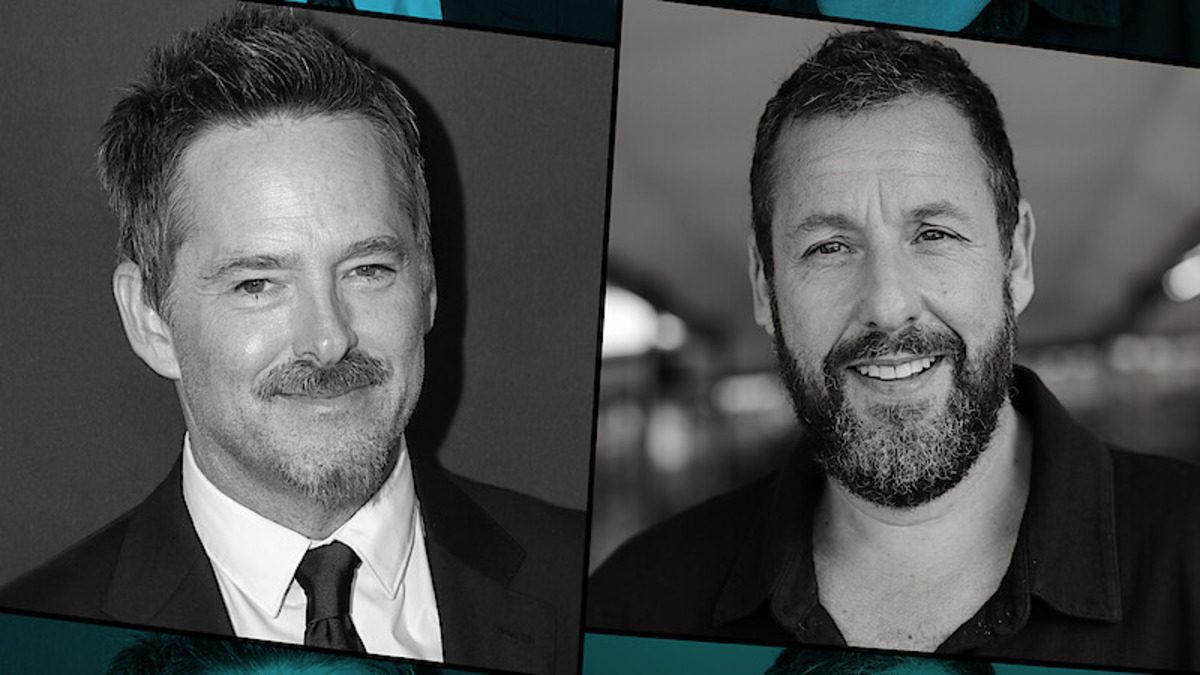
A Different Side Of Adam Sandler
Seeing a version of Adam Sandler pop up in a project that isn’t all humour every five minutes, is refreshing. This is not because he can’t do comedy, but because every now and then, he reminds you that with the jokes and humour, there is a seriousness to life. And when he leans into it, the seriousness plays out. Sandler now steps into that space with Time Out. A new Netflix film that’s pairing him with Willem Dafoe. Which… is not a combination anyone would have imagined for 2026, but here we are.
The Slow Burn Of A Life Built On Lies
The film comes from the Deliver Me From Nowhere director Scott Cooper, who tends to operate in that quieter, non flashy, heavier corner of storytelling. It’s just uncomfortable enough to make you sit with things you’d usually avoid. And Time Out sounds like it’s leaning fully into that. At the centre of it all is Vincent, a man who’s just been fired but can’t bring himself to tell to be honest with his family. Instead, he chooses to lie than be honest, spinning a web to conceal his situation. The lies are further escalated when he creates an investment scheme and asks friends to contribute, and the deception threatens to overwhelm his life and his family. He builds a version of reality that looks intact from the outside. Still employed, stable, and fine. Except…….he really isn’t. And like most lies that start small, it doesn’t stay that way for long. The web of lies grows, stretches, and starts asking for backup from investors, and friends. With more lies to protect the first one. And it all starts to unravel.
It’s Not About Losing A Job
You might think that this is a story about losing a job. But it really isn’t. It’s about identity and about how tightly we tie our worth to what we do. About how quickly things fall apart when that disappears and we don’t know who we are without it. It’s also not an original story in the strictest sense. The film is based on the 2001 French psychological drama L’Emploi du temps, a film that clearly stuck with Cooper long enough for him to circle back to it years later.
Scott Cooper’s Quiet But Heavy Storytelling
In an interview with Deadline, Cooper had this to say:
“I first encountered Laurent Cantet’s film in 2001, and it’s lived with me ever since,” Cooper said. “I’ve been thinking about revisiting it for years, but now felt like the right moment — we’re living in a time where questions of identity, work, and self-worth have become impossible to ignore.”
Why This Story Feels Uncomfortably Current
This is a moment where work, purpose, and self-worth are all kind of… tangled. So revisiting a story like this now feels less like a remake and more like a story of current events unfolding. The cast around Sandler is Dafoe, and going them are names like Gaby Hoffmann, F. Murray Abraham, and Steve Zahn filling out the world. Which means this isn’t just one man quietly falling apart. It’s a network of relationships slowly feeling the strain of something that was never meant to hold. This is a pressure cooker at full throttle. The kind that builds slowly, making you wonder how long someone can keep pretending before everything blows up.
Also… Sandler and Dafoe in the same film feels like one of those casting decisions that shouldn’t work on paper, but might end up being exactly what makes the whole thing land.
