

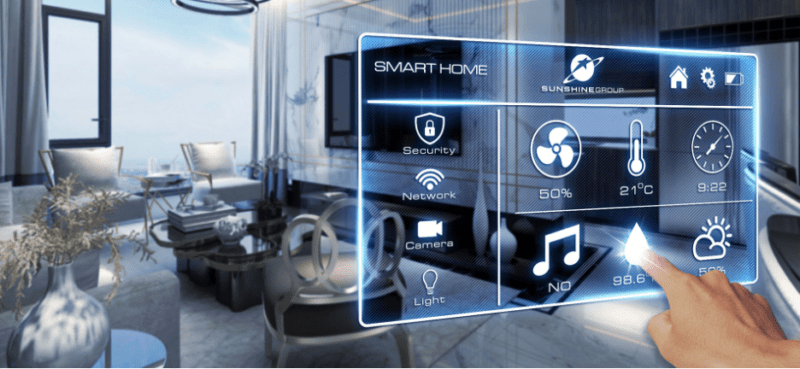
Smart home used to mean a guy on YouTube with a server rack in his garage and a wife who had clearly given up trying to dim the lights herself. That era is over. In 2026, smart home tech has quietly slipped into the mainstream, and in South Africa it arrived through the back door for very local reasons. We didn’t fall in love with automation because we wanted our fridge to text us. We got into it because crime stats kept us awake at night, and because the years of load shedding taught a whole country to think hard about power, and somewhere along the way we realised a R300 smart plug could do something useful about both.
Now, that energy story has changed in the last year, and it’s worth being honest about it upfront because half the smart home advice floating around online is still fighting the last war. South Africa passed a full year without load shedding in May 2026, the first clean 365 days since 2018, and Eskom is calling the grid the most stable it’s been in five years. The era of buying gadgets just to survive the dark is over. But energy hasn’t stopped mattering, it’s just flipped from survival to cost, because electricity tariffs are climbing hard and that’s exactly where smart tech earns its keep now.
So if you’ve been circling this stuff, eyeing the cameras and the smart bulbs at Takealot and wondering whether it’s worth the hassle, this is your starting point. No jargon for the sake of jargon, no pretending you need a R50,000 setup to feel the benefit. Just the actual lay of the land in 2026.
Understanding Smart Home Technology
At its simplest, a smart home is any setup where everyday devices in your house can talk to each other and to you, usually through the internet and usually from your phone. That’s the whole trick. A smart bulb is just a bulb that listens. Smart plug is just a plug with a brain and a Wi-Fi chip. A smart camera is a camera that pings your phone instead of recording quietly to a box nobody ever checks until it’s too late.
The key components break down into a few buckets. You’ve got your devices, which are the things that actually do the work: bulbs, plugs, cameras, door sensors, thermostats, smart locks, robot vacuums if you’re feeling fancy. Then you’ve got the hub or app, which is the brain that ties everything together and gives you one place to control it all. And then there’s the connectivity layer, the invisible plumbing that lets all of it communicate, whether that’s your home Wi-Fi, Bluetooth, or one of the newer mesh networking standards we’ll get to shortly.
Why are South Africans actually buying into this? The market tells the story better than I can. The South Africa smart home market was valued at around USD 1.24 billion in 2024 and is projected to grow at a compound annual rate of roughly 16.75% through 2030, with adoption driven by self-sufficiency and control rather than pure lifestyle automation. Read that last part again, because it’s the most South African sentence in this entire article. We’re not doing this to impress dinner guests. The energy angle that once meant “keep the lights on during stage 6” has matured into something more durable: monitoring and managing what you spend. Electricity tariffs jumped 8.76% for Eskom customers from April 2026 with a further 9.01% hike for municipal customers from July, and another increase already locked in for 2027, leaving households facing a cumulative rise of well over 18% across two years. A smart plug that tells you the geyser is the real villain on your bill suddenly pays for itself.
Security is the other half of the equation and it isn’t going anywhere. Demand for smart cameras, alarms, and access-control systems remains strong across both urban and suburban areas, and access control was the single largest segment of the local market. So the two pillars holding up the South African smart home are clear: spend less on power, and sleep easier about what’s happening at the gate.
As for how it all actually works, picture it like a group chat. Each device is a member. Your Wi-Fi network is the chat itself. The app on your phone is you, the admin, sending instructions and reading the updates. When you tap “turn off” on a smart plug, your phone sends that command over the internet to a server, which relays it to the plug sitting in your lounge, which then physically cuts the power. Better internet infrastructure has made this viable for more homes, with fibre-to-the-home and expanding LTE coverage giving connected devices the reliable backbone they need to work smoothly. The whole thing happens in about a second, which feels like magic the first time and completely normal by the third.
Top Smart Home Devices for 2026
Let’s talk about what to actually buy, because this is where most beginner guides either drown you in options or pretend money grows on trees.
The trending categories in 2026 are exactly what you’d expect given everything I said above. Smart cameras and video doorbells lead the pack for South African buyers, followed by smart plugs and energy monitors, smart bulbs, motion and door sensors, and increasingly smart locks and gate controllers. The fancier stuff like robot vacuums, smart thermostats and connected appliances exists and sells, but it’s not where most people start.
On the brand front, here’s the honest comparison for a local home, roughly from entry-level to premium.
Tuya / Smart Life is the workhorse of the South African smart home. It’s an ecosystem rather than a single brand, which means dozens of cheap manufacturers all use the same app, and local stores stock it heavily. You’ll find Tuya-compatible Wi-Fi switches, plugs, lighting and automation components ranging from under R150 for basic smart tags and plugs up to a few hundred rand for switches and relays. It’s affordable, it’s everywhere, and it’s the easiest on-ramp. The trade-off is that quality varies wildly between the no-name manufacturers riding on the platform.
Xiaomi sits in that lovely sweet spot of cheap-but-actually-good. Xiaomi has an official South African presence covering phones, bands, and a full range of smart home devices, and their cameras, sensors and bulbs punch well above their price. If you want one brand that mostly just works without you becoming a part-time IT technician, this is a strong default.
TP-Link Tapo has quietly become the go-to for cameras specifically. Local retailers stock a wide Tapo range including indoor pan-tilt cameras, 2K and 3MP outdoor security cameras, and they’re reliable, well-priced and easy to set up. For a first camera, you could do a lot worse.
Hikvision is the step up into proper security territory. It’s what your security company probably installs, it’s built like a tank, and the footage quality is excellent. The trade-off is that it’s pricier and leans more towards traditional surveillance than playful smart home tinkering. Hikvision cameras span an enormous range from budget units to professional installations running into the thousands.
eufy deserves a mention for the security-conscious who hate subscriptions. Its security kits bundle a HomeBase, keypad, motion sensor and entry sensors with DIY installation and no monthly fees, storing footage locally rather than holding it hostage behind a paywall. In a country where you don’t always want to depend on the cloud, or on a stable connection, that local storage matters.
So what should you actually look for when choosing? Five things, in order of importance for a South African buyer.
First, does it have an offline or local mode? When the fibre drops or the power blips, devices that depend entirely on the cloud become expensive paperweights. Local control is gold here.
Second, does it help you manage or survive a power interruption? Load shedding may be gone for now, but localised load reduction still hits parts of Gauteng daily, the grid carries a winter-risk asterisk, and ordinary outages happen. A camera with battery backup, a plug that monitors consumption, or a device that keeps working when the router blinks is worth more here than a flashy feature you’ll use twice.
Third, how big is the ecosystem behind the app? A device tied to a thriving platform like Tuya or Xiaomi means you can add to it later without juggling six different apps. Speaking of which.
Fourth, does it support Matter? This is the new universal standard I keep hinting at, and in 2026 it’s finally worth caring about. There are now over 700 Matter-certified products and more than 1,000 Thread-certified devices on the market, roughly tenfold growth from 2024. A Matter logo on the box is increasingly a sign that the device won’t trap you in one company’s walled garden.
Fifth, what are the running costs? Some cameras nudge you towards monthly cloud subscriptions for features that used to be free. Decide upfront whether you’re okay with that or whether you want the eufy-style one-and-done approach.
Setting Up Your Smart Home
Here’s the part where people psych themselves out for no reason. Setting up a basic smart home in 2026 is genuinely easier than assembling flat-pack furniture, and nobody’s ever been left with three mysterious screws at the end.
A sensible first setup, step by step, looks like this.
Start with one device and one app. Pick a single product, a smart plug is the perfect training-wheels choice, and download its companion app. Resist the urge to buy six things at once. You want to learn the rhythm of pairing before you scale.
Get your Wi-Fi sorted first. Almost every consumer smart device in this price bracket connects to the 2.4GHz band, not 5GHz. This trips up more beginners than anything else. If your router broadcasts both bands under one name, you may need to temporarily separate them or follow the app’s specific guidance to force the 2.4GHz connection during setup.
Pair the device. Open the app, hit “add device,” and follow the prompts. Usually you’ll hold a button until a light flashes, then the app finds it and asks for your Wi-Fi password. Ninety seconds, done.
Test it before mounting anything. Toggle it on and off from the app while standing right next to it. Confirm it actually works before you screw a camera to a wall three metres up.
Build one simple automation. Once you’ve got two or three devices, create a basic routine, like a plug that switches your outside light on at sunset. This is the moment it stops being a gadget and starts being a system, and it’s weirdly satisfying.
Now, the challenges, because I’d be lying if I said it always goes smoothly.
The number one headache is that 2.4GHz versus 5GHz thing I just mentioned. If a device refuses to pair, that’s your first suspect, every single time. The fix is usually in your router settings or the app’s advanced pairing mode.
The second is weak Wi-Fi coverage. That smart camera at your front gate is often the furthest point from your router, which is exactly where the signal is weakest. The solution is a mesh Wi-Fi system or a well-placed extender. Don’t fight physics, just extend the network.
The third is power interruptions wrecking your routines. This was the load-shedding nightmare a year ago, and while national cuts have stopped, the lesson still holds because outages, load reduction and the odd substation fault haven’t gone anywhere. When the power cuts, your router reboots, your devices drop offline, and sometimes automations get confused on the way back up. The practical fix is to put your router and internet gear on a small UPS so the network stays alive even when the lights don’t. It’s still one of the highest-value upgrades for a South African smart home, and a lot of people skip it.
The fourth is app overload. Buy from five brands and you’ll have five apps, which defeats the entire point of convenience. Either stick mostly to one ecosystem, or lean on the new standards that let different brands cooperate.
Which brings me to integration. The good news in 2026 is that this is no longer the nightmare it once was. The whole promise of Matter is simple: buy a lock, bulb, or sensor with the Matter logo and it should pair with Apple Home, Google Home, Amazon Alexa, or Samsung SmartThings without needing a vendor-specific hub. Platforms like Samsung SmartThings and Home Assistant are particularly good at integrating devices from hundreds of different brands, so if you do end up with a mixed bag of hardware, those are the apps that’ll wrangle them into one place. My honest advice for beginners though is to keep it simple at first. Pick one ecosystem, get comfortable, and only start mixing brands once you actually understand what you’re doing.
Future Trends in Smart Home Technology
Here’s where it gets interesting, and where I’ll allow myself a little speculation.
The defining shift happening right now is the move from the smart home that responds to the smart home that anticipates. Through 2025 the legacy voice assistants in our phones and speakers began morphing from scripted command-and-control hubs into conversational, multimodal AI systems sitting at the centre of the home, with Apple’s Siri, Amazon’s Alexa, and Google’s Gemini all making the jump. The thing in your kitchen that used to just set timers and butcher your music requests is becoming something closer to a household manager.
AI is the engine driving all of this, and the buzzword you’ll hear everywhere is ambient intelligence. The idea is technology so seamless it blends into the background and operates without constant explicit commands, a house that intuitively knows you’ve arrived, adjusts the temperature based on the weather forecast, sets your preferred evening lighting and starts your playlist, all while prioritising power from your solar battery. The leap underneath that is agentic AI, the brainpower that takes the system from simply responding to commands to performing complex, self-directed tasks based on a half-formed thought.
Now, I’ll be the realist in the room, because that’s the job. The marketing is years ahead of the reality. Amazon and Google launched ambitious AI updates with Alexa+ and Gemini for Home, but the experience has been mixed, with these systems now holding more natural conversations while still sometimes stumbling on basic reliability. From hands-on testing, the current split is that Google’s Gemini wins on intelligence and creativity while Amazon’s Alexa+ handles practical household commands faster, meaning Gemini is the more impressive assistant but Alexa+ is arguably the better smart home one. Translation: nobody’s nailed it yet, and the dream of a house that reads your mind is still a dream.
There’s also the obvious wrinkle that none of this is built for us. Ambient intelligence requires advanced continuous sensing, capturing audio, video and movement, which raises a privacy question that gets thornier the more your house watches you. The smarter answer emerging is on-device processing, where a local chip analyses sensitive raw data like camera feeds right on the device and only transmits the safe insight, such as “motion detected in kitchen” rather than the raw video, to the cloud. For South Africans on flaky connections and tight data budgets, local processing isn’t just a privacy nicety, it’s a practical necessity.
So what do I predict for 2027 and beyond? A few things.
The voice assistant fades into the background as the primary interface and your home starts acting on its own more often, asking your permission less. Expect the major AI players to keep angling to become the household’s silent organiser, the invisible butler quietly planning for things you haven’t thought of yet. The competition for that role won’t just be Alexa and Gemini either, with ChatGPT muscling into the same space.
On the hardware side, the boring-but-important stuff matters most. Matter continues to evolve with the latest specifications expanding device support and pushing the standard beyond residential automation into smart buildings and enterprise IoT. One of the genuine unsolved problems is outdoor range, with the industry weighing Sub-GHz Thread and long-range Wi-Fi to finally let smart devices reach the gate, the driveway and the garden reliably. For a country where the perimeter matters more than the lounge, that outdoor range breakthrough could be the most relevant innovation of the lot.
And locally, I’d bet on continued growth driven by the same forces that started it, just reweighted for the times. South Africa’s smart home market is forecast to grow at a striking pace through 2030, with security and access control the largest segment and smart kitchen appliances the fastest-growing one. The fundamentals here aren’t going to change. We’ll keep buying this stuff to feel safer and, now that the grid has steadied but tariffs keep climbing, to wrestle some control back over what we spend. The cleverest products will be the ones that understand that instead of selling us a fantasy of a frictionless American smart home.
That’s the real takeaway, if you want one. Start small, solve a real problem, and let the system grow with you. You don’t need the house from the future. You need a camera that actually pings your phone and a plug that tells you the truth about your power bill. Everything else is a bonus.
