
Nicolas Cage has played some very strange characters over the years. He has swapped faces with John Travolta. Stolen the Declaration of Independence. Set his head on fire. And once played a fictional version of himself who became involved with criminals. So you would think very little could frighten this man. But apparently, artificial intelligence can.
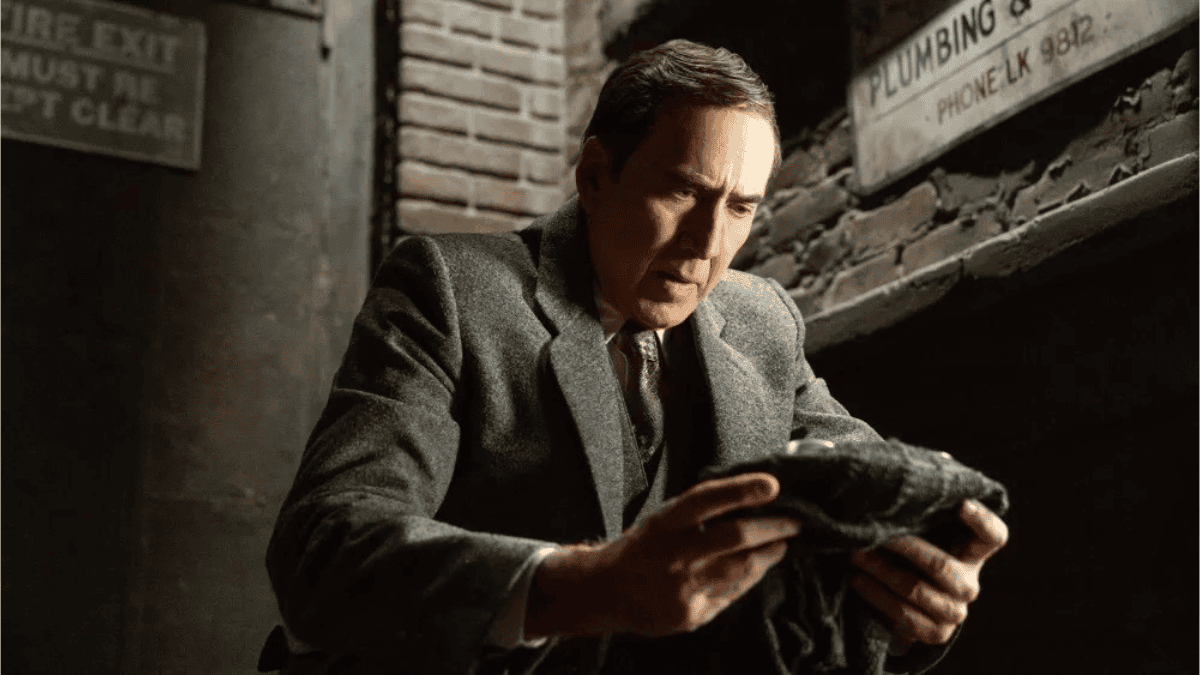
Cage has revealed that he refused to sign an AI waiver while working on Spider-Noir. The series starred him as Ben Reilly. A private detective operating in 1930s New York who also happens to be a masked superhero. During a New York Comic Con panel, Cage described Amazon as an “AI-friendly company”. He then made his own position perfectly clear.
“I am not an AI-friendly actor,” he said.
Cage also suggested that his refusal may mean he will not work with Amazon again. Although, he did not appear too worried about it.
“I didn’t sign the waiver to let them use AI on Spider-Noir,” he explained. “I’m probably not going to be working with that studio again, but that’s okay.” Variety
Well, that is one way to leave a meeting. Now, we do not know exactly what the waiver would have allowed. Neither Cage nor Amazon has publicly explained its full wording. So we should not assume that the studio planned to replace him with a digital Nicolas Cage and keep making episodes without telling anybody. Although, let’s be honest. If Hollywood ever creates an artificial actor who behaves unpredictably, buys castles and delivers every line as though the universe may collapse, Nicolas Cage would be a rather ambitious place to start.
But his decision raises a serious question.
How much of themselves should actors have to hand over when they accept a role?
A performance no longer ends when the director calls cut. Studios can scan faces, record voices and capture the movements of an actor’s entire body. Technology can then preserve those details for future use. That may help with visual effects. It can also create younger versions of characters or finish scenes that would otherwise prove impossible. But it can do much more than that. A digital likeness could allow a studio to alter a performance. A synthetic voice could produce dialogue the actor never recorded. And depending on the wording of an agreement, a performer may lose control over where that material appears later.
That is where things become uncomfortable.
An actor may agree to play one character in one production. But an AI waiver could potentially open the door to uses nobody imagined when the contract was signed. Technology moves quickly and contracts have a nasty habit of hanging around. Cage has spoken about this concern before. His performances are also very specifically his own. Nobody watches Nicolas Cage because he disappears politely into the background. He makes choices that another actor may never consider. Sometimes those choices are subtle and on other occasions he shouts the alphabet while dressed as a terrifying parent.
Either way, the performance comes from a human being making a decision in that moment. An AI system may be able to copy his voice or recreate his face. But copying the surface does not explain why Cage decided to do something in the first place. So I guess that’s the location of the problem.
Artificial intelligence can imitate a performance after studying the result. It does not experience the fear, embarrassment, instinct or complete madness that helped create it.
Spider-Noir has already ended after one season. Prime Video chose not to renew the series despite its 11 Emmy nominations and 2.6 billion viewing minutes during its first six weeks. And yes, some people have naturally connected the cancellation to Cage’s refusal. But we do not have proof of that.
Amazon has not said the AI waiver caused the cancellation. Cage has not claimed that it did either. A streaming service can cancel a successful-looking programme for many reasons. Most of those reasons usually involve money, strategy or a mysterious spreadsheet nobody outside the building will ever see.
Still, Cage clearly believes his stance may affect his relationship with the studio. Big actors can refuse uncomfortable terms. Nicolas Cage has enough experience and recognition to walk away. But a young performer receiving their first major opportunity may not feel they have the same choice.
That is why this conversation extends beyond one actor and one superhero series. The question is not whether studios will use AI because we know that they already are. The question is whether performers will receive clear information, proper payment and the right to say no without watching their careers disappear afterwards.
Cage has made his decision. He would rather lose future work than give a company permission he may later regret. That is not an anti-technology tantrum. It is somebody asking where his performance ends and the studio’s ownership begins.
And honestly, if Hollywood cannot recreate Nicolas Cage without Nicolas Cage, perhaps that is exactly how it should be.
