

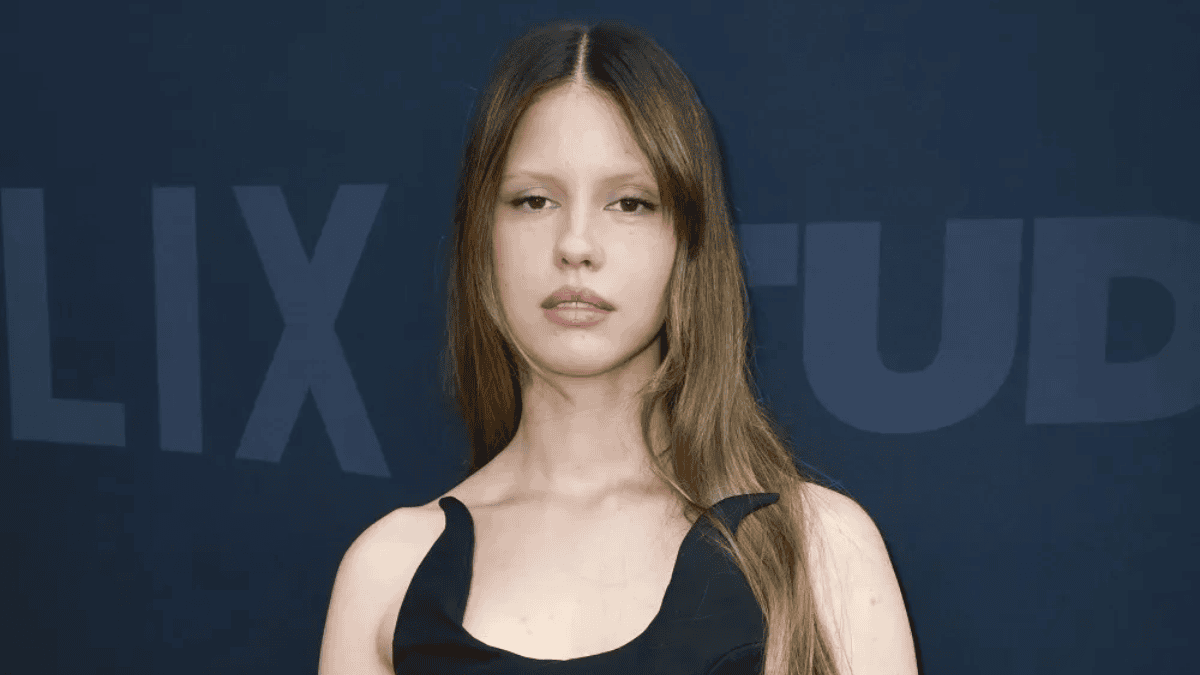
Isn’t it strange for someone who does not use Instagram or any other social platform to appear on them? And this is exactly the case with Mia Goth.
Mia Goth has found herself at the centre of an Instagram controversy involving a photograph she never took, a T-shirt she never wore and a statement she never made.
What a wonderful time to be alive.
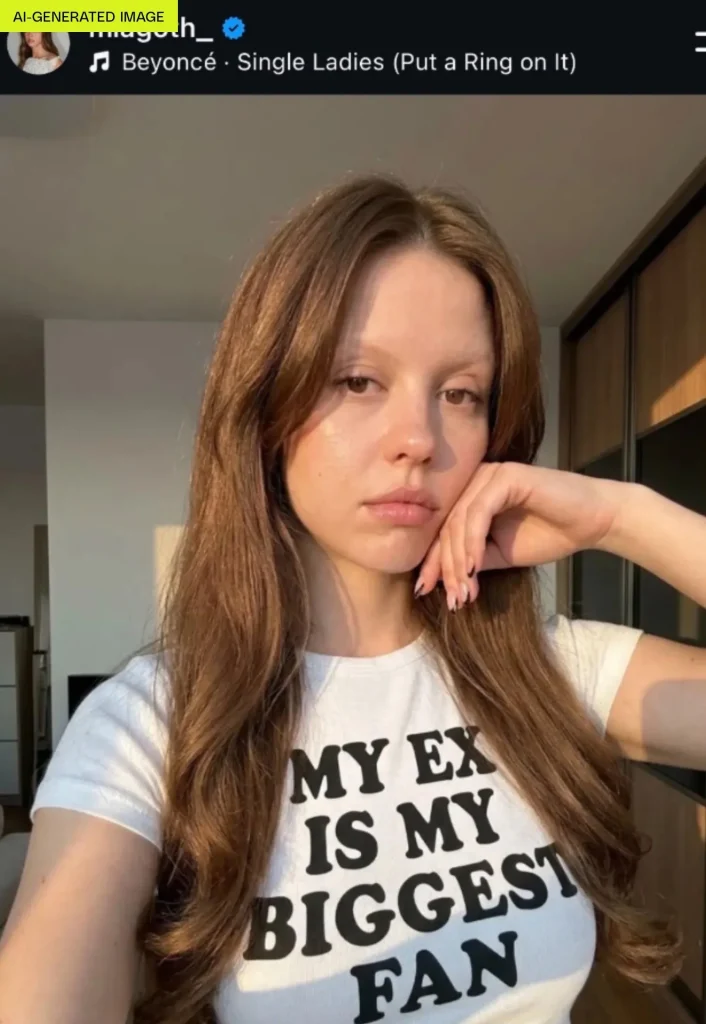
The image appeared shortly after news broke that Goth had filed for divorce from Shia LaBeouf. It showed the actress wearing a white T-shirt with the words, “MY EX IS MY BIGGEST FAN” printed across it. The post even included Beyoncé’s Single Ladies, because apparently the artificial version of Mia Goth enjoys making extremely obvious music choices.
There was only one rather important problem.
The image was fake.
A verified Instagram fan account called @miagoth_ posted the AI-generated picture. The post reportedly received hundreds of thousands of likes and screenshots spread across other platforms. Not to mention that several entertainment publications treated the image as a genuine response to the divorce.
Goth’s representatives confirmed that she did not create or approve the photograph. They also said they had submitted several complaints about the account, which continued posting counterfeit AI images of her. The Verge. Now I know that celebrity fan pages have existed for years. Most of them share photographs, interviews and clips from old films. Which is great.
People like an actor and create a page to celebrate their work. The problem comes in when they start creating new photographs of that person and placing words on their clothing. That is something else entirely. This can hardly be considered as fan art showing Goth as a vampire or a character from a video game. The picture looked like an ordinary selfie. It also appeared at exactly the right moment to convince people that she was responding publicly to something happening in her private life.
Goth filed for divorce in Los Angeles after nearly ten years of marriage. Court documents reportedly state that the couple separated in July 2025. Associated Press That is the verified information. But everything else attached to the photograph came from a machine and an account pretending to speak on her behalf. It is sad that by the time the truth arrived, the fake image had already travelled. People had liked it, discussed it and turned it into evidence of how Goth supposedly felt about her former partner.
She did not need to say anything. The internet took it upon itself to do it for her.
The blue verification mark made matters worse. We once understood that little symbol to mean that a platform had confirmed an account belonged to the person named on it. Now it can simply mean that somebody has paid for Meta Verified. The account identified itself as a fan page, but it had more than one million followers and carried the same blue tick many users still associate with authenticity.
Meta later removed the account for impersonating a public figure. But that happened after the image had already spread. So the system eventually worked, I suppose. But it was a little too late cos, the damage was already done.
What makes this story especially unsettling is that Goth had chosen not to participate in social media. That should have given her some distance from its daily nonsense. Instead, somebody created a digital version of her and allowed that version to participate anyway. This is where AI images move beyond being a silly internet trick.
A convincing fake can create a reaction that never happened. It can make somebody appear cruel, angry, political or deeply embarrassing. And because social media rewards speed, the lie usually gets several laps around the track before the correction has found its shoes. Public figures may have teams who can complain to platforms and contact publications. Even then, Goth’s representatives say they had to submit multiple complaints. What chance does an ordinary person have when a fake photograph begins moving through group chats, school pages or community accounts?
Imagine your shock at discovering an image of you has gone viral. It looks legit. Your face is there, and is recognised by your friends and family. Your only defence at that point is insisting that the event everybody can see never happened. And regardless of the evidence in your possession, your denial does not carry quite the same weight.
There is also a responsibility on entertainment publications which must be addressed. A viral post may look like an easy story, especially when it involves a celebrity divorce and a conveniently dramatic T-shirt. But if the person does not have an official account, perhaps somebody should pause before writing an entire article about what the shirt supposedly means.
Is it too much to ask that things get checked out before publishing? Or is that too much of a radical concept?
The facts stand out plainly. Mia Goth did not make a public statement about her divorce through Instagram. Nor did she pose in that shirt. And she was not even on the platform. But AI gave her a face, Instagram gave the account a blue tick and the internet supplied the story.
The truth only arrived afterwards.
These days, refusing to post cannot stop somebody from posting as you. Does it get any scarier?
