

From January 2028, PlayStation will stop producing physical discs entirely, with every new game after that date, first-party and third-party alike, sold only through the PlayStation Store or as digital download codes at retailers. Thirty-plus years of console gaming defined by something you could hold in your hand, lend to a mate, or trade in when money got tight, and Sony has given it an expiry date.
The numbers tell you why. Sony’s own financials show digital downloads accounted for 85% of full-game software sales on PS4 and PS5 in the most recent quarter, and the shift has been a decade in the making, with digital’s share climbing from around 13% in 2013 to nearly 80% by 2025. Sony’s official line is predictably corporate. Sid Shuman, Sony Interactive Entertainment’s senior director of content communications, framed it as a natural adaptation to consumer trends and a way to align with how the community prefers to play. Which is true, as far as it goes. But preference and acceptance are not the same thing, and the difference matters more here than it does in Tokyo or California.
Let’s talk about what this actually means in South Africa.
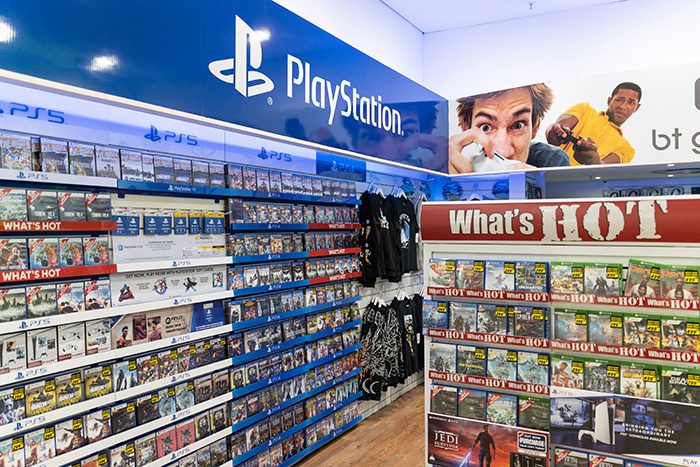
Walk into any BT Games and you’ll still see shelves of physical pre-orders, with new AAA titles sitting between R999 and R1,499. At launch, digital and physical pricing here is now mostly within R50 to R100 of each other, so the sticker price argument is largely settled. What isn’t settled is everything around it. The secondhand economy in this country is not a nostalgia hobby, it’s a survival mechanism. Facebook marketplace listings, Bobshop, that mate in Lenasia who sells his finished games to fund the next one. Physical discs let a R1,400 game recover R600 or R700 of its cost while digital games recover nothing. Sony isn’t just changing a format, but deleting an informal market that made console gaming affordable for a huge slice of this country.
Then there’s the bandwidth question. Yes, fibre coverage in the metros is better than it’s ever been, and uncapped packages have made 100GB downloads a background task rather than a project taht lasts an entire weekend. But step outside Joburg, Cape Town and Durban and the picture changes fast. Plenty of households still game on capped LTE or fixed wireless, where a single modern title can eat an entire month’s data.
The retail knock-on is a very real problem too. GameStop has reportedly closed more than 1,300 stores over the past two fiscal years in the US, and while our local specialist retailers have already diversified into hardware, merch and trade-ins, a hard 2028 cutoff removes the anchor product that pulls people into those stores in the first place.
And there’s an ownership question nobody at Sony wants to convenienetly forget. Alongside the disc announcement, Sony confirmed it’s shutting the PS3 store in select markets this year, with global PS3 and Vita store closures to follow. Previously purchased content will remain downloadable, Sony says. Except Sony made a similar promise in 2021, reversed course after backlash, and then closed the PS3 store anyway. When your entire library exists at the pleasure of a server in another hemisphere, “owning” a game becomes a licensing arrangement you never really read.
The timing isn’t accidental either, landing months before GTA 6’s November launch, and just days after fans discovered the game’s “physical” edition ships with a download code in the box rather than an actual disc.
The truth is for most of us, day to day, nothing changes. We’ve been buying digital for years, chasing PlayStation Store sales that physical retail could never match. But convenience for the connected majority comes at the cost of access for everyone else. Whether Sony’s 2028 deadline arrives as progress or as a paywall depends entirely on which side of the fibre line you’re standing on.
