

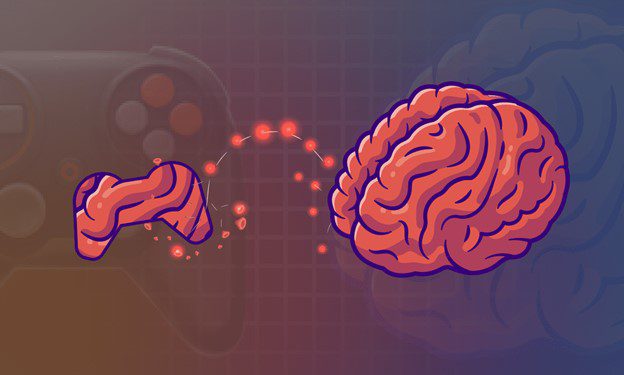
Every Friday night, for years, I had the same routine. Controller in hand, Fifa Ultimate Team, real world on mute. Rain or shine, good week or brutal week, that session was locked in. My wife knew it, my mates knew it, and if you tried to schedule anything over it, good luck to you.
Looking back now, I realise those few hours were doing a lot more than entertaining me. They were holding me together.
Corporate life has a way of filling every corner of your head. From deadlines, politics and targets, the low hum of pressure never quite switches off. Gaming was the one place where none of it could follow me. For those few hours my brain had one job: win the match and progress to the next division. Everything else had to wait outside.
Then I left corporate, and something strange happened.
The Friday sessions started feeling less essential. Not less fun but definitely less necessary. I still fire up my PS5 and love every minute of it, but the pull isn’t what it used to be. Instead I’ve found myself reading more. I’ve always enjoyed reading, but now I actually finish books. I now watch films, which anyone who knows me will tell you was never my thing. It’s like my brain swithced and is no longer running from something, finally had space for slower pleasures.
That shift made me curious about a question geek culture has been dodging for years. Is gaming genuinely good for our heads, or is it just a very entertaining way of running away from our problems?
Turns out the answer is both, and the difference matters.
Turns out the science is on our side
For most of my life, gaming and mental health only appeared in the same sentence when someone was blaming Grand Theft Auto for society’s collapse. Ask any of us who grew up defending the hobby to worried parents. So it’s been genuinely satisfying to watch actual research catch up with what we knew all along.
The gaming industry’s big global player survey last year asked over 24,000 players across 21 countries about why they play. Around 80% said games give them stress relief and mental stimulation. Three quarters credit gaming with sharpening their creativity and problem-solving. That’s not a niche of hardcore fans talking themselves into a hobby. That’s a global majority of gamers describing the same thing I felt every Friday night.
And if you think surveys are just gamers marking their own homework, there’s even harder evidence. Researchers in Japan found a genuinely clever way to test this properly. During the pandemic, consoles were so scarce there that retailers sold them through lotteries. Which accidentally created the perfect experiment: thousands of people who wanted a console, where pure luck decided who got one. When researchers tracked nearly 100,000 of them, the lottery winners came out measurably better off, less psychological distress, more life satisfaction. Not because happier people game more, but because gaming made them happier. That study ended up in Nature Human Behaviour, one of the most respected journals on the planet.
Even the World Health Organization, hardly a fanboy organisation, has partnered with game studios on mental health campaigns.
So no, you weren’t imagining it. That post-match calm is real.
But let’s be honest about the other side
Here’s where I have to be straight with you, because this same WHO also officially classifies “gaming disorder” as a real condition. And before we get defensive about that, it’s worth understanding what they actually mean. It’s not about hours played. It’s about gaming taking priority over everything else in your life, and continuing even when it’s clearly wrecking things, for a year or more.
Most of us will never get anywhere near that. But the ingredient that pushes people toward it is one every gamer knows intimately: escapism.
And this is the part that hit home for me.
Researchers have started drawing a line between two kinds of escape, and once you see it, you can’t unsee it. There’s escaping the world, logging on after a rough week to give your head somewhere else to be. And there’s escaping yourself, gaming to avoid feelings, problems or truths that will still be sitting there when the console powers down.
The first kind? The research says it’s basically fine. Healthy, even. The second kind is where things go wrong, because the relief is temporary and the thing you’re avoiding just compounds interest while you’re away.
My Friday sessions were the first kind. I know that now because of what happened when the stress disappeared: the needdisappeared with it, but the enjoyment stayed. If I’d been running from myself rather than from a rough work week, leaving corporate wouldn’t have changed a thing. The console would have just kept absorbing whatever I didn’t want to face.
Gaming in South Africa hits different anyway
Worth remembering the scale of what we’re talking about here. There are roughly 26.5 million gamers in this country. That’s not a subculture, that’s nearly half the population, most of us on our phones because a console costs north of R10k here thanks to import duties and exchange rates.
Our version of the hobby comes with uniquely South African friction. We’ve all planned sessions around load shedding schedules. We’ve all watched a data bundle evaporate mid-download. And weirdly, I think that friction protects us a little. It’s hard for gaming to quietly swallow your life when the electricity, the data costs and the exchange rate keep tapping you on the shoulder.
The old stereotype is dead here too. Nearly half of South African gamers now are women, and the person grinding Call of Duty Mobile in a taxi is as much a gamer as anyone with an RGB battlestation.
The question I’d ask you to ask yourself
No lecture coming, I promise. I’m a gamer who happens to run a publication, not a therapist. But my own experience left me with a question worth passing on, and it’s not the one you usually hear.
It’s not “how many hours are you playing?” Hours were never the real measure. Some of my healthiest stretches included plenty of gaming, and I know people who barely play but use what little they do play to hide.
The better question is this: when you switch off, do the things waiting for you feel more manageable, or exactly as untouched as you left them?
If gaming is your reset button, protect it. Defend your Friday night session without apology, because the evidence says it’s doing more for you than most things on your calendar. But if the console has become the only room in your life where you can stand to be, that’s not gaming’s fault, and it’s not gaming’s job to fix.
The game will always be there when you get back.
Make sure you come back.
